Disaster Risk Reduction (DRR)
JGSS has extensive experience in disaster risk reduction, emergency preparedness, humanitarian response, and resilient recovery, working closely with communities, local governments, and development partners across disaster-affected areas of Nepal.
- 2015 Earthquake Response: Supported 8,000 households in Sindhupalchok with essential food and non-food items following the devastating 2015 earthquake.
- Major Disaster Response: Provided humanitarian and recovery support to communities affected by the Lidi landslide, Jure landslide, Bhotekoshi floods, and Melamchi floods, including emergency assistance and community recovery support.
- District Emergency Warehouse: Supported the construction and strengthening of the Sindhupalchok District Emergency Warehouse and supported the establishment and maintenance of contingency stocks and emergency response supplies.
- Disaster Preparedness & Response: Provided Search and Rescue training to 102 people, First Aid training to 97 people, and prepared 77 community volunteers for emergency response.
- Local Government Capacity Building: Provided disaster risk reduction and preparedness training to all 12 local governments (palikas) of Sindhupalchok.
- District Disaster Planning: Prepared and supported the updating of the Sindhupalchok District Disaster Preparedness and Response Plan (DPRP).
- Local Disaster Risk Management: Prepared 30 Local Disaster Risk Management Plans (LDRMPs) and supported communities to identify hazards, vulnerabilities, capacities, and locally appropriate risk reduction measures.
- Community-Based DRR: Established 8 Community-Based Disaster Risk Management Committees (CBDRMCs) and strengthened community-level preparedness and response mechanisms.
- Disaster Simulations: Conducted disaster preparedness and emergency response simulations in 10 locations.
- Risk Mitigation Infrastructure: Constructed 13 gabion/retaining walls at high-risk locations to reduce exposure to landslides, floods, and other hazards.
- School Safety: Prepared 7 School Disaster Management Plans (SDMPs) and trained 22 teachers in First Aid and Vulnerability and Capacity Assessment (VCA).
- Emergency Response Systems: Supported the establishment of a Local Emergency Operation Centre (LEOC) and strengthened local and district-level emergency response capacity.
- Emergency Preparedness: Provided search-and-rescue equipment and emergency materials to municipalities and rural municipalities and advocated for emergency funds at the local level.
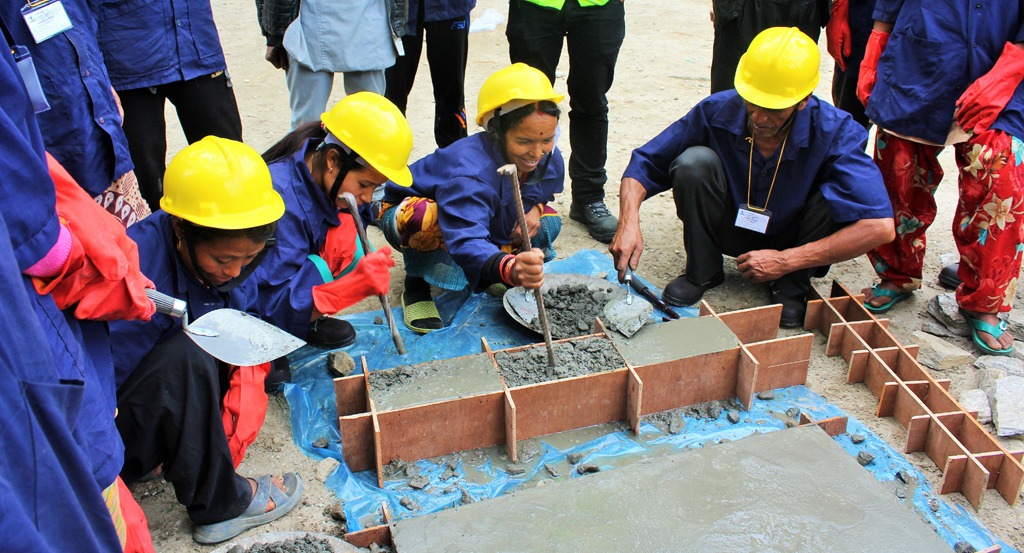
- Resilient Reconstruction: Promoted Build Back Better principles and integrated disaster risk reduction into reconstruction and local development planning.
- Humanitarian & Recovery Support: Provided winterization assistance to 1,200 households and reached 2,624 households through technical assistance and social mobilization for shelter recovery and reconstruction.
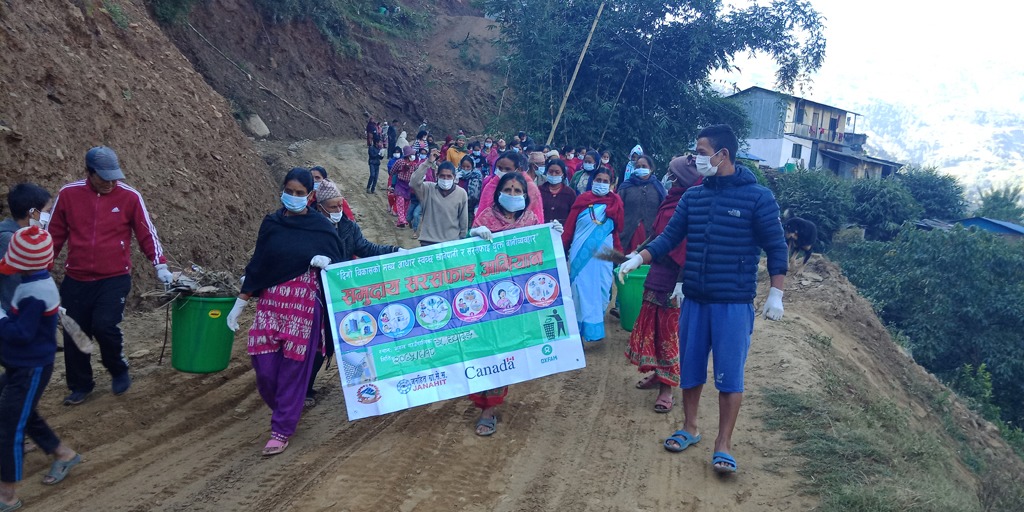
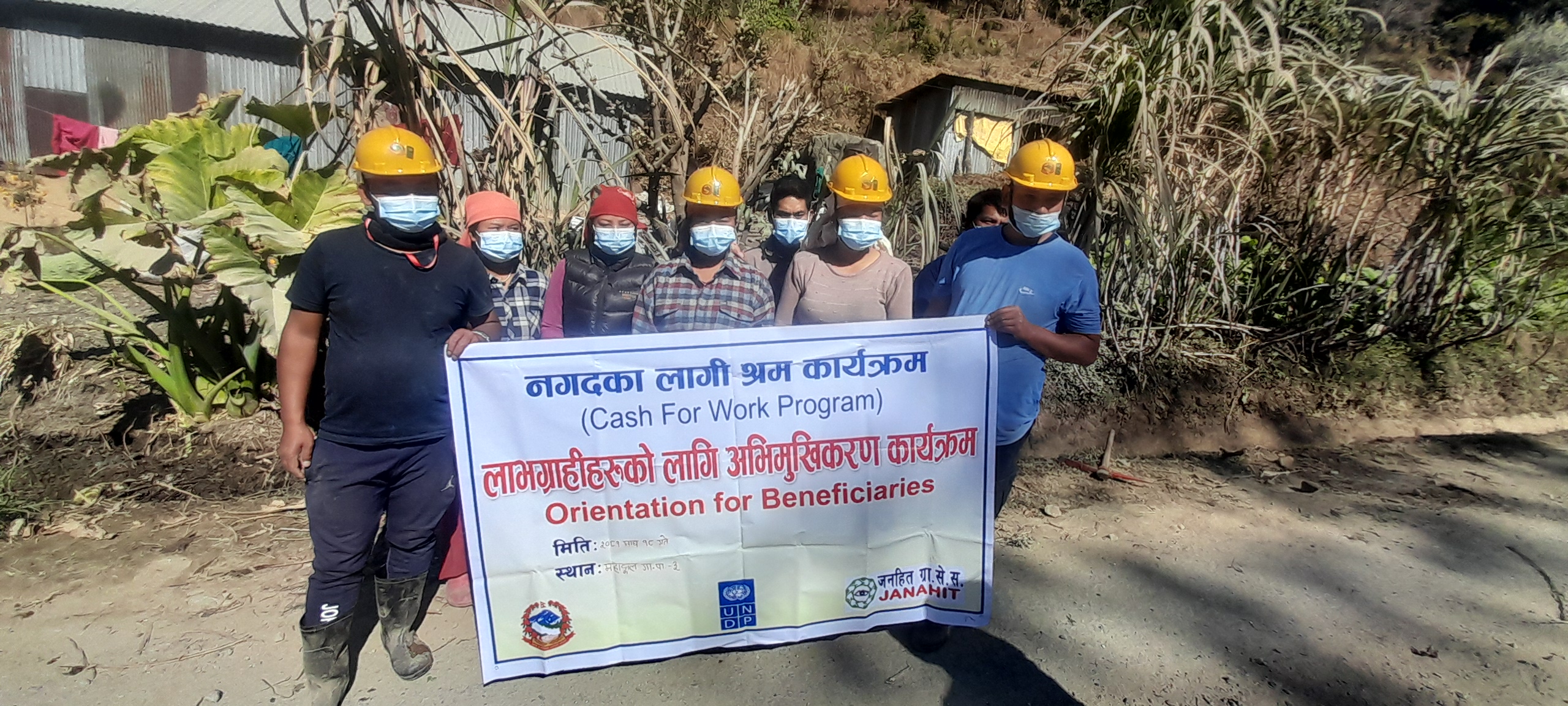
- Cash for Work & Environmental Restoration: Supported 600 vulnerable people through 6,000 workdays, combining temporary employment with debris clearance, environmental restoration, and rehabilitation of community infrastructure.
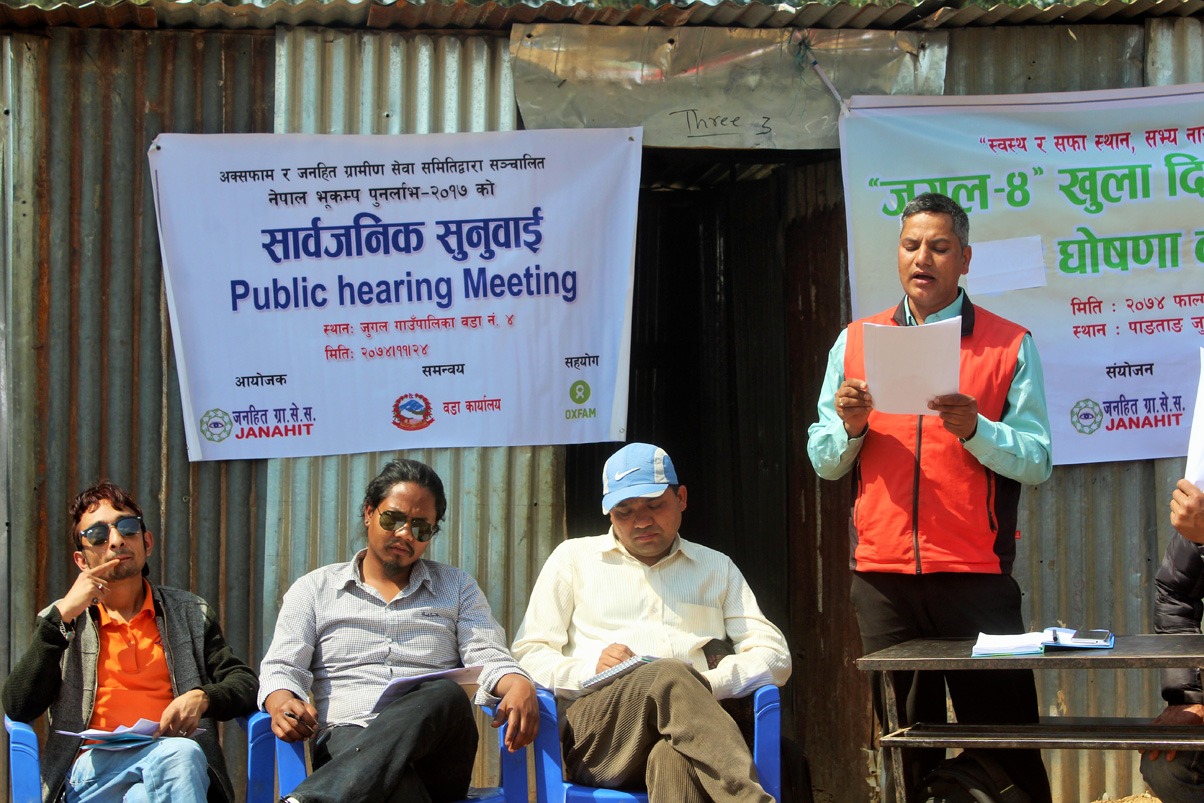
- Community & Youth Mobilization: Mobilized community members, youth, volunteers, schools, and local organizations for disaster preparedness, risk assessment, awareness, and resilience-building.
- Inclusive Disaster Response: Prioritized women, youth, Dalit communities, persons with disabilities, older people, displaced families, and other vulnerable groups throughout disaster preparedness, response, and recovery interventions.
Overall Impact
Through long-term engagement in disaster-affected communities and collaboration with UNDP, Oxfam, WVIN, NHB, Caritas Nepal/Germany, local governments, communities, schools, and other stakeholders, JGSS has contributed to strengthening emergency response systems, contingency preparedness, local disaster governance, community resilience, resilient reconstruction, livelihood recovery, and inclusive disaster risk management.