Nepal Earthquake Response and Recovery Project
Project Name: Nepal Earthquake Response and Recovery Project – WASH, Livelihood, DRR, Shelter and Gender
Implemented by: Janahit Gramin Sewa Samittee (JGSS)
Supported by: Oxfam in Nepal
Project Period: January 2016 to September 2019
Covered Areas: Earthquake-affected communities of Sindhupalchowk District, including Jugal, Helambu, Chautara Sangachokgadhi, Bhotekoshi, Barhabise and other affected local levels
Total Budget: NPR 300,858,957
Major Interventions and Achievements:
- Livelihood and Economic Recovery
- Provided agricultural machinery grants to 1,383 households and livestock recovery support to 1,444 households.
- Provided petty-trader grants to 450 people to restore and strengthen small businesses.
- Constructed and rehabilitated 11 irrigation canals to improve agricultural production and livelihoods.
- Provided beehives and training to 15 women and supported goat-shed construction for 78 vulnerable households.
- Provided agricultural machinery and tools to 26 agricultural and farmer groups, including mini tillers, corn shellers, and multi-threshers.
- Established a Lapsi processing unit and provided related training.
- Established a milk collection and chilling centre to strengthen local agricultural value chains.
- Provided vocational training in blacksmithing, carpentry, welding, and other livelihood skills.
- Women, Gender and Youth Empowerment
- Promoted gender equality, women’s empowerment, and inclusive participation through community-based awareness, training, and leadership initiatives.
- Trained and recognized 59 community members as Gender Champions to promote gender equality and positive social norms.
- Conducted self-defence training to strengthen the confidence, safety, and resilience of women and girls.
- Provided training on the Single Women Protection Fund and proposal writing to strengthen women’s access to opportunities and resources.
- Promoted the participation of women, youth, marginalized groups, and vulnerable households in livelihood recovery, community decision-making, disaster preparedness, and local development.
- Supported skills development and income-generation opportunities for youth and working-age community members, including carpentry, welding, blacksmithing, house wiring, and other vocational skills.
- WASH and Hygiene Promotion
- Provided latrine kits to 2,438 households and constructed public and institutional sanitation facilities.
- Constructed and rehabilitated 11 water supply schemes and improved WASH facilities in schools and health facilities.
- Constructed child-, disability-, and gender-friendly latrines with handwashing facilities and water connections.
- Supported ODF declaration in five former VDCs: Pangtang, Hagam, Baramchi, Jalbire, and Kadambas.
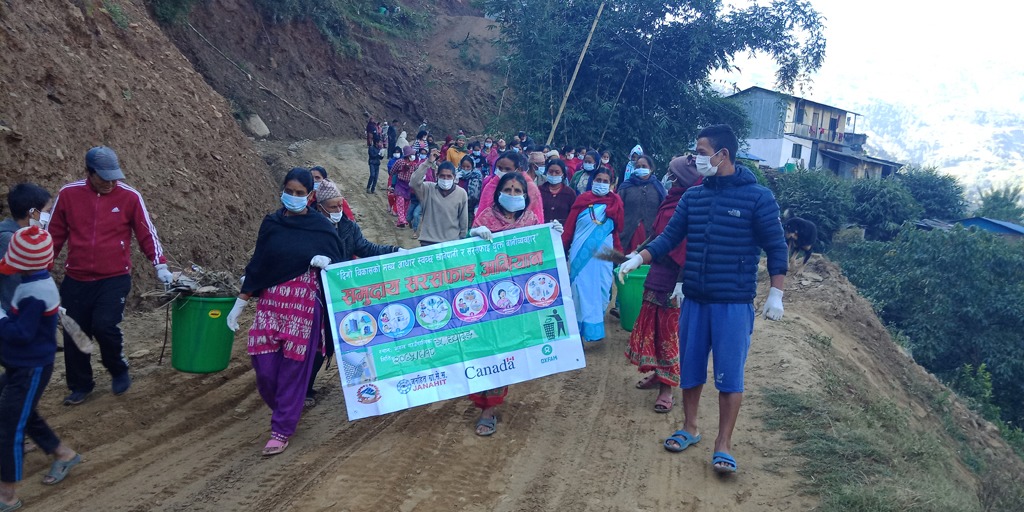
- Conducted hygiene promotion sessions and awareness events in schools and communities.
- Distributed water purification/filter systems to 4 secondary schools, 44 basic schools, and 428 households.
- Shelter, Housing and Integrated Settlement Recovery
- Constructed 40 eco-friendly CSEB houses with individual tap stands and toilets for internally displaced people in Helambu Rural Municipality.
- Constructed 19 houses in Jugal Rural Municipality for internally displaced families, including WASH and livelihood support.
- Supported the development of an integrated settlement for 22 households in Bhotekoshi Rural Municipality, providing safer and more organized housing solutions for earthquake-affected and vulnerable families.
- Constructed 6 houses in Barhabise Municipality for displaced and vulnerable Dalit households.
- Provided technical assistance, including sub-overseers and trained masons, to support earthquake-resilient reconstruction in 7 wards of Jugal Rural Municipality.
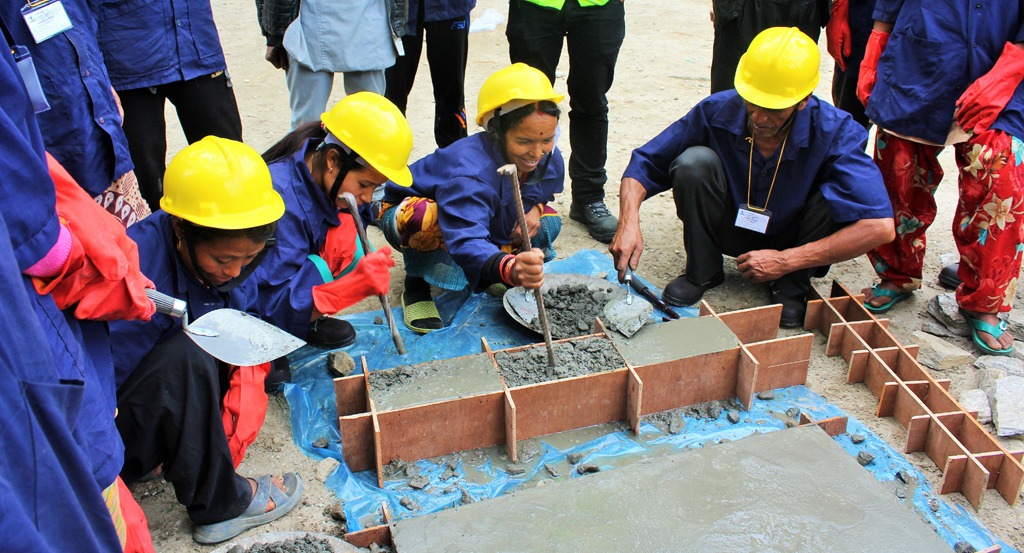
- Provided mason, carpentry, and house-wiring training to local community members, strengthening local construction skills, employment opportunities, and capacity for resilient reconstruction.
- Disaster Risk Reduction and Preparedness
- Provided Search and Rescue training to 102 people, First Aid training to 97 people, and prepared 77 community volunteers.
- Conducted disaster preparedness simulations in 10 locations.
- Constructed gabion walls at 6 high-risk locations for disaster risk mitigation.
- Supported the preparation of disaster management plans for 10 schools and local governments.
- Prepared Local Disaster Risk Management Plans (LDRMPs) for 22 former VDCs.
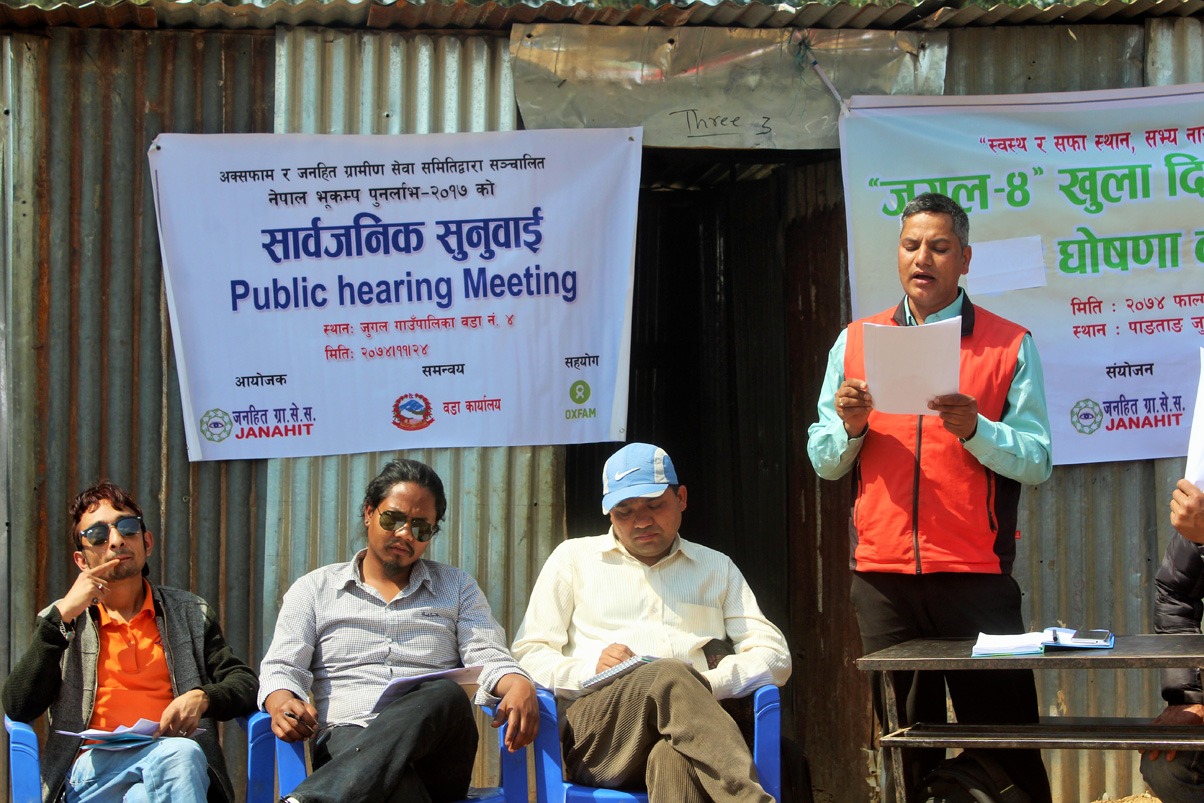
- Supported the establishment of emergency funds in 5 local governments and advocated for emergency funds across all local levels of the district.
- Updated the Sindhupalchowk District Disaster Preparedness and Response Plan (DPRP).
- Provided search-and-rescue and emergency materials to municipalities and rural municipalities.
- Supported Chautara Sangachokgadhi Municipality to establish a Local Emergency Operation Centre (LEOC).
- Supported the construction and strengthening of a district warehouse and provision of emergency response materials.
- Community Engagement and Social Inclusion
- Conducted REFLECT and community discussion sessions on vital registration, citizenship, marriage registration, birth registration, and access to legal documents.
- Supported 27 people to obtain citizenship certificates, 11 couples to obtain marriage certificates, and 12 people to obtain birth certificates.
- Promoted community participation through user groups, community organizations, volunteers, schools, cooperatives, and local governments.
- Ensured that recovery and reconstruction activities prioritized women, youth, persons with disabilities, Dalit communities, displaced families, and other vulnerable groups.
Key Focus:
The project adopted an integrated approach to earthquake recovery, livelihood restoration, WASH, shelter and housing, integrated settlement development, disaster risk reduction, gender equality, youth empowerment, and social inclusion. Through close collaboration with Oxfam, local governments, community organizations, and affected communities, JGSS contributed to rebuilding safer, more inclusive, and resilient communities while strengthening local capacities, livelihoods, leadership, and disaster preparedness across earthquake-affected areas of Sindhupalchok.